How Often to Repaint Your House Exterior in Northwest Arkansas
The usual answer is every 5 to 10 years, and your sun-baked walls will tell you where your house falls in that range.
October 5, 2026 · 4 min read
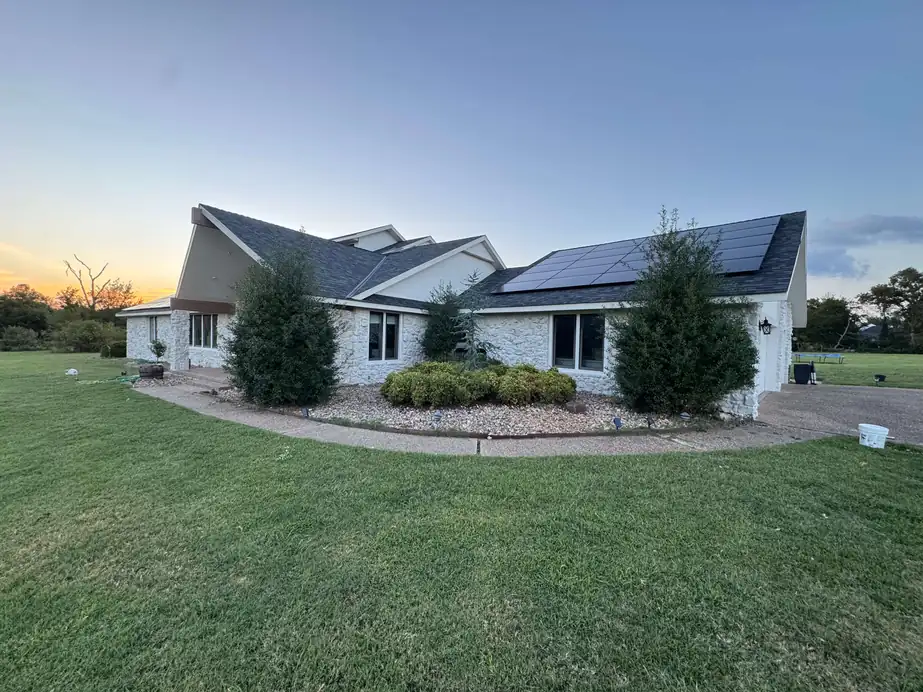
Ask how often a house exterior needs repainting and the honest answer is a range: generally every 5 to 10 years. That is a wide window, and where your home lands in it depends on the siding, the paint that went on last time, the prep behind it, and, most of all, how much weather your walls take. In Northwest Arkansas that is a lot of weather.
Why the range is so wide
Our summers are hot and humid with strong UV. Spring brings heavy storms that drive rain sideways into siding. Winter swings above and below freezing, so any moisture that gets into a crack expands and pries it wider. Shaded walls stay damp and grow mildew. A house in an open Springdale subdivision with no trees takes a very different beating than a house tucked into the woods in Bella Vista or sitting in a Fayetteville neighborhood with mature oaks.
Material matters too. Wood siding and trim take paint hard and need attention sooner. Brick and stone are different, since they are usually not painted at all unless you choose to. Fiber cement and similar siding usually hold a finish longer than raw wood. And the paint itself counts: high-quality acrylic latex paints are what we would look for on an exterior, because they flex with the seasons instead of cracking.
Start with the south and west walls
If you want an early read on your paint, walk to the south and west sides of the house. These walls get the most direct afternoon sun, the hottest surface temperatures and, often, the hardest driving rain. They fail first. A house can look fine from the street while its west wall is already telling you something.
Then compare. Stand at a corner and look at the sunny wall next to the shaded one. If the color has dulled on one and not the other, or if the sunny wall has lost its sheen, you are seeing years of UV in a single glance. Do the same with an area under the eaves versus a stretch fully exposed to the sky.
The signs it is time
- Chalking: drag your hand across the siding. If a pale powder comes off on your palm, the binder in the paint is breaking down.
- Fading and a flat, dead look where the finish used to have some body.
- Peeling, bubbling or curling paint, especially along the bottom of boards and around windows.
- Cracked, shrunken or missing caulk at window frames, door casings and trim joints. These gaps let water in behind the paint.
- Bare wood on trim, sills, fascia or the lower edge of siding where the paint has worn through.
- Mildew: green, gray or black patches that return after cleaning, most often on north walls and shaded stretches.
One sign alone is not always an emergency. Light chalking on an older finish is normal. But two or three signs at once, or any of them on a wall that has not been touched in a long time, means you are close to the point where a repaint stops being cosmetic and starts being protection.
Why not wait
It is tempting to stretch a paint job one more year. The problem is that once paint breaks, water finds the wood. Wet wood swells, then rots, and rotten trim has to be replaced before it can be painted. That turns a painting job into a carpentry job. Waiting also means more scraping and sanding, since failed paint has to come off before a new coat will hold. A repaint done while the existing finish is mostly sound is almost always easier than one done after it has let go.
This is also why prep deserves more of your attention than color. Surface preparation, primer application and repair work are what let a new finish last through those 5 to 10 years. A fresh coat over loose paint, open seams and dirty siding will not make it to the far end of that range.
When to schedule it
Spring and fall are the sweet spots in Northwest Arkansas: mild temperatures and drier stretches. Midsummer heat can make paint dry too quickly on a sun-baked wall, and a wet spring can stall a job for days. Mildew growth is also easier to deal with before it settles in for another humid season. If you are not sure whether to do it this year or next, take photos of your south and west walls each spring. Looking at pictures side by side makes slow changes obvious.
Weatherproof coatings made for our hot summers, heavy rains and seasonal shifts are worth asking about, along with trim, shutters and doors, which often wear out before the field of the wall does. It is common to touch up trim and accents on a shorter cycle and repaint the main walls on the longer one.
Get a second set of eyes
You do not have to guess. A painter who looks at the wall, not just a photo of it, can tell you whether you have another season or two or whether it is time now. At Quality Pro Painting we build estimates from actual measurements, and that starts with looking at your house in person.
If your south or west wall is making you nervous, call (479) 966-6381 or visit /estimate to request a free measured estimate. Obed Posadas and the crew serve Springdale, Bentonville, Rogers, Fayetteville and Bella Vista, and the price you hear is the price you get, with no hidden surprises.
Quality Pro Painting, (479) 966-6381
Call (479) 966-6381More articles
Lime Wash, Paint or Pressure Washing: What Your Northwest Arkansas Brick Needs
Three ways to refresh tired brick, what each one really does, and how to pick the right one for your house.
Flat, Eggshell, Satin or Semi-Gloss: Choosing Interior Sheen Room by Room
Color gets all the attention, but sheen decides how a painted room wears, cleans and reflects light.